
RT-0002
Sitala Mata Mandir, Shri Nagar Colony: A Cool Courtyard
In a quiet lane behind the market in Shri Nagar Colony, Varanasi, a small orange temple to Sitala Mata stands in a railed courtyard under a peepal and a neem, looked after by the people nearby.
 Field notes by Sreya Das
Arya Mahila PG College, Varanasi · Visited 11 November 2025
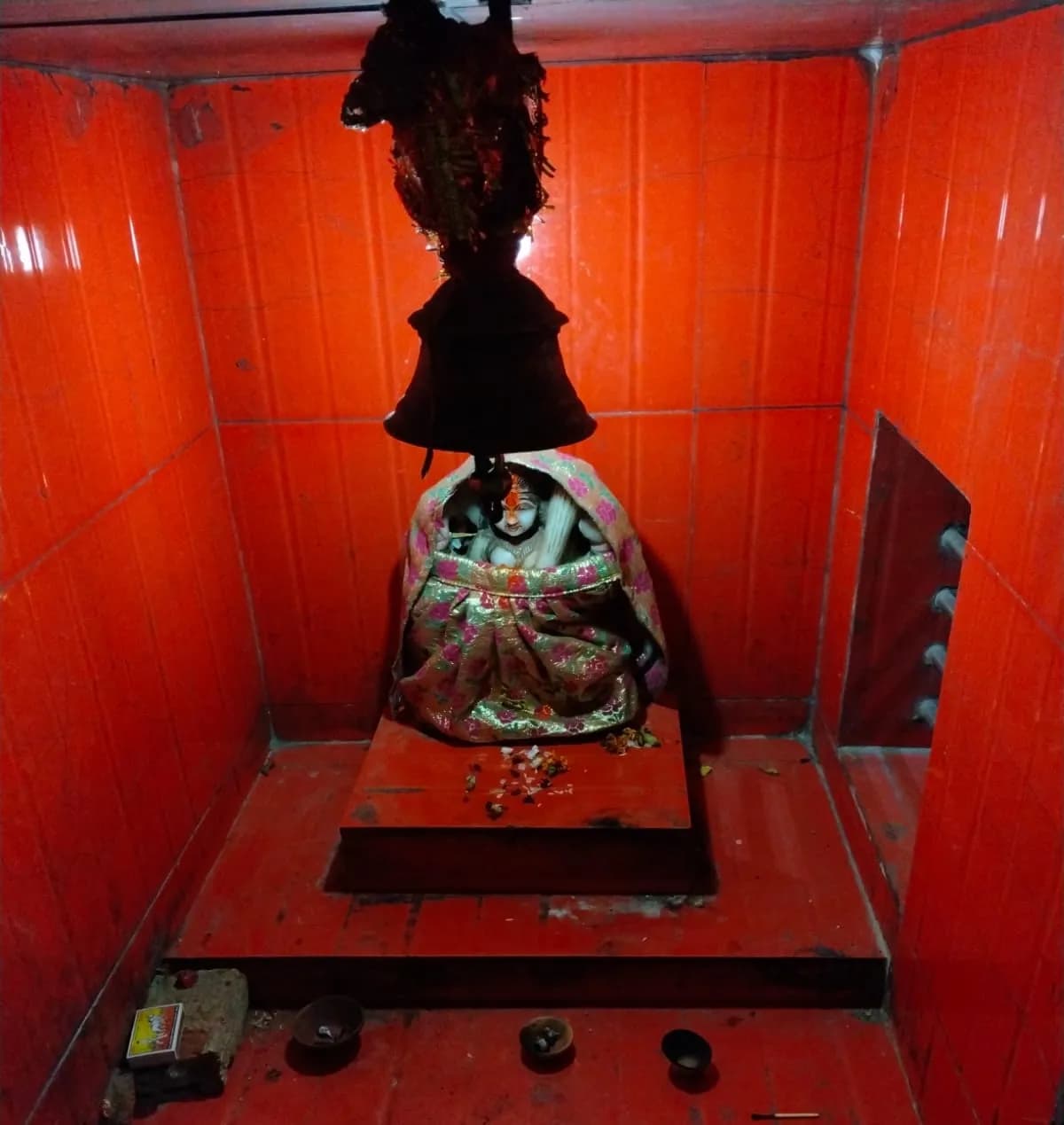
Sitala Mata Mandir is a small orange temple in Shri Nagar Colony, Varanasi, in a quiet lane behind the crowded markets. It belongs to Sitala Ma, a mother goddess to whom the women of the neighbourhood pray for the protection of their children. Sreya Das visited on 11 November 2025.
Finding it
A railing encloses a clean, small courtyard in front of the temple, shaded by a peepal and a neem. The place is calm, and people slow down when they reach it.
What you see
The structure is simple. A shikhara (the tower) painted orange rises over the sanctum, the garbhagriha, and a bell, called ghanta, is fixed to the low ceiling. Inside, the walls are orange tile. The clothed image of Sitala Ma sits on a stepped orange stone platform under the hanging bell, with bowls for lamps on the floor in front.
Her face is kind and her expression unruffled. She is dressed in cloth and has vermilion on her forehead.
The peepal and the neem have long, strong branches. Sreya thinks of them as part of the temple, cooling and shading the area just like the goddess herself.
How it is worshipped
The women of the locality do the worship, simply and warmly. They offer cold food, water, neem leaves and flowers, light diyas and incense sticks, and bow their heads. People from the neighbourhood visit and look after the temple.
On Sitala Saptami or Sitala Ashtami the place shines more brightly than usual. Devotees light no fire at home that day and eat only food cooked the day before, called basoda or basi khana. The custom comes from a belief that fire and heat might anger the goddess.
What people say
The women pray to Sitala Ma for protection from disease, especially for their children, and for peace in the household. In the legend as it is told, a displeased Sitala is said to spread disease, and devotees believe that when she is worshipped with devotion she protects them.
According to Sreya, the legend has been known for centuries, and people worship Sitala Ma with the same faith today. The temple is not grand, she finds, but it blends into everyday life, and that is what makes it special.
The wider picture
From the Indic Warriors Editorial Desk.
Sitala's name is usually glossed as the cool one. She is associated with smallpox and fevers, and devotees understand her as both the one who sends the heat of illness and the one who cools it. Her usual iconography is a donkey mount, a broom, a hand fan, a pot of water and neem leaves. Neem (Azadirachta indica) is the tree associated with her, and one grows over this courtyard.
Sitala Ashtami falls in the dark fortnight of the month of Chaitra, after Holi, and some communities keep it a day earlier as Sitala Saptami. The food is cooked the day before and eaten cold, a custom called basoda. The World Health Organization declared smallpox eradicated in 1980, and the worship has continued in lane temples like this one. Our explainer on Sitala Mata and the custom of basoda goes further. This entry is part of Roadside Temples, a field series on Indic Warriors.
If you visit
This visit was a little after six on a Tuesday evening in November. The courtyard is railed and the neighbours look after the temple, so go quietly and ask before you photograph anyone at prayer.
Field notes by Sreya Das · Edited and expanded by the Indic Warriors Editorial Desk · Published by Indic Warriors