
RT-0001
Hanuman Mandir, Maulvi Bagh Road: A Temple Between Shops
A small orange temple to Hanuman stands between large buildings on Maulvi Bagh Road, Varanasi, locked outside the hours of worship and still a daily stop for people passing by.
 Field notes by Sreya Das
Arya Mahila PG College, Varanasi · Visited 9 November 2025
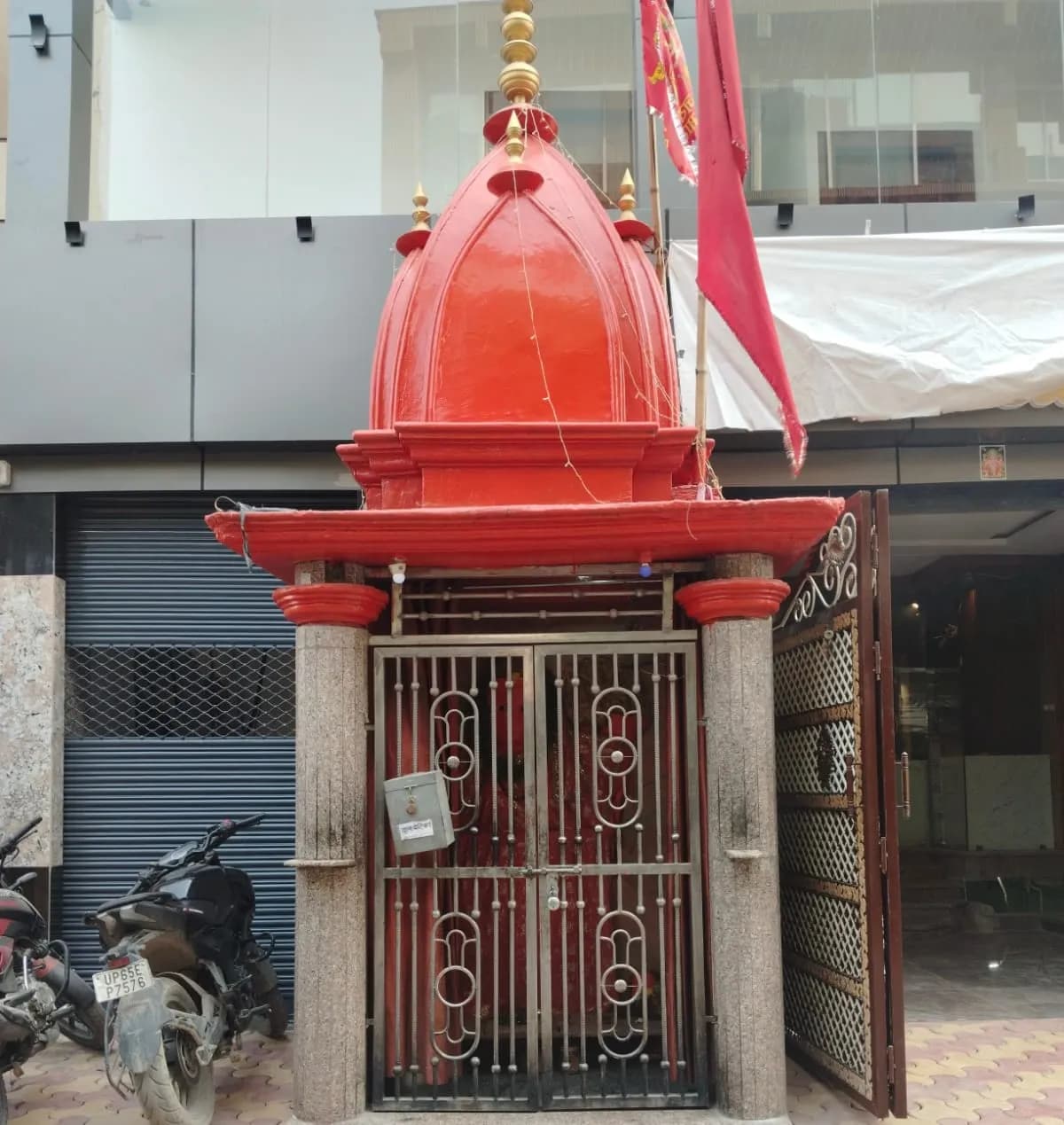
Hanuman Mandir is a small temple on Maulvi Bagh Road in Shri Nagar Colony, Varanasi, squeezed between much larger buildings. Sreya Das visited on 9 November 2025.
Finding it
The temple sits on the pavement between two commercial buildings, in cramped lanes where rickshaws and car horns are never far off. A steel grille gate closes the front. It is not a place that draws visitors. For the people who live and work around it, it is a daily stop, a quiet moment of faith before they go back to the noise and movement of the street. Sreya records that it has stood here for almost thirty years.
What you see
The building is small and square, with a domed shikhara (the tower) rising over the sanctum, the garbhagriha. It is painted a deep orange-red, with gold finials on the dome. Orange flags hang from it. Sreya reads them as signs of Hanuman's devotion, strength, sacrifice and victory over negativity.
The image of Hanuman is about five feet tall and coated entirely in vermilion. He is draped in red and gold cloth, colours that stand for auspiciousness and power. His eyes are wide, unblinking and painted white, and they hold a quiet power that makes a visitor feel safe and calm.
In the morning the pandit sets a small diya, incense sticks and bunches of fresh marigolds around the image, with a garland of peepal leaves. A silver bell hangs from the low roof, and its sound is clear and quick during the hours of puja.
How it is worshipped
The gate stays locked unless the pandit is worshipping. He comes every morning for nitya puja, the daily worship, and every evening for sandhya puja, the worship at dusk. Worship here does not feel bound to elaborate ritual.
Even with the gate closed, people come. They take off their shoes, close their eyes, fold their hands in namaskar and bow in front of the temple. When the pandit is away the place never feels empty. Incense lingers in the air, the diya keeps glimmering, and passers-by stop with a sense of reverence.
At the evening aarti, the lamp offering, the pandit lights the diyas and incense sticks, and the light glows against the red and gold cloth. The chanting of the Sandhya Arti fills the air, and the honking of the road and the small worries of the mind seem to fall away for a while.
What people say
Sreya puts it this way: the people who pass share a certainty that the divine presence does not depend on open gates, and that it lives in the faith of the passer-by.
The wider picture
From the Indic Warriors Editorial Desk.
In North India, Tuesday and Saturday are the customary days for worshipping Hanuman. In Varanasi, the Sankat Mochan temple is traditionally attributed to the poet Tulsidas.
A temple of this size sits at the other end of the scale from that one. It has a pandit who comes twice a day, a gate that opens for the hours of worship, and passers-by who bow from the pavement. Our explainer on Hanuman at the roadside goes further. This entry is part of Roadside Temples, a field series on Indic Warriors.
If you visit
This visit was at about half past ten on a Sunday morning in November. The gate is locked outside the hours of worship, and people pray from outside it. Remove your shoes before you stand at the gate, as the worshippers do.
Field notes by Sreya Das · Edited and expanded by the Indic Warriors Editorial Desk · Published by Indic Warriors